
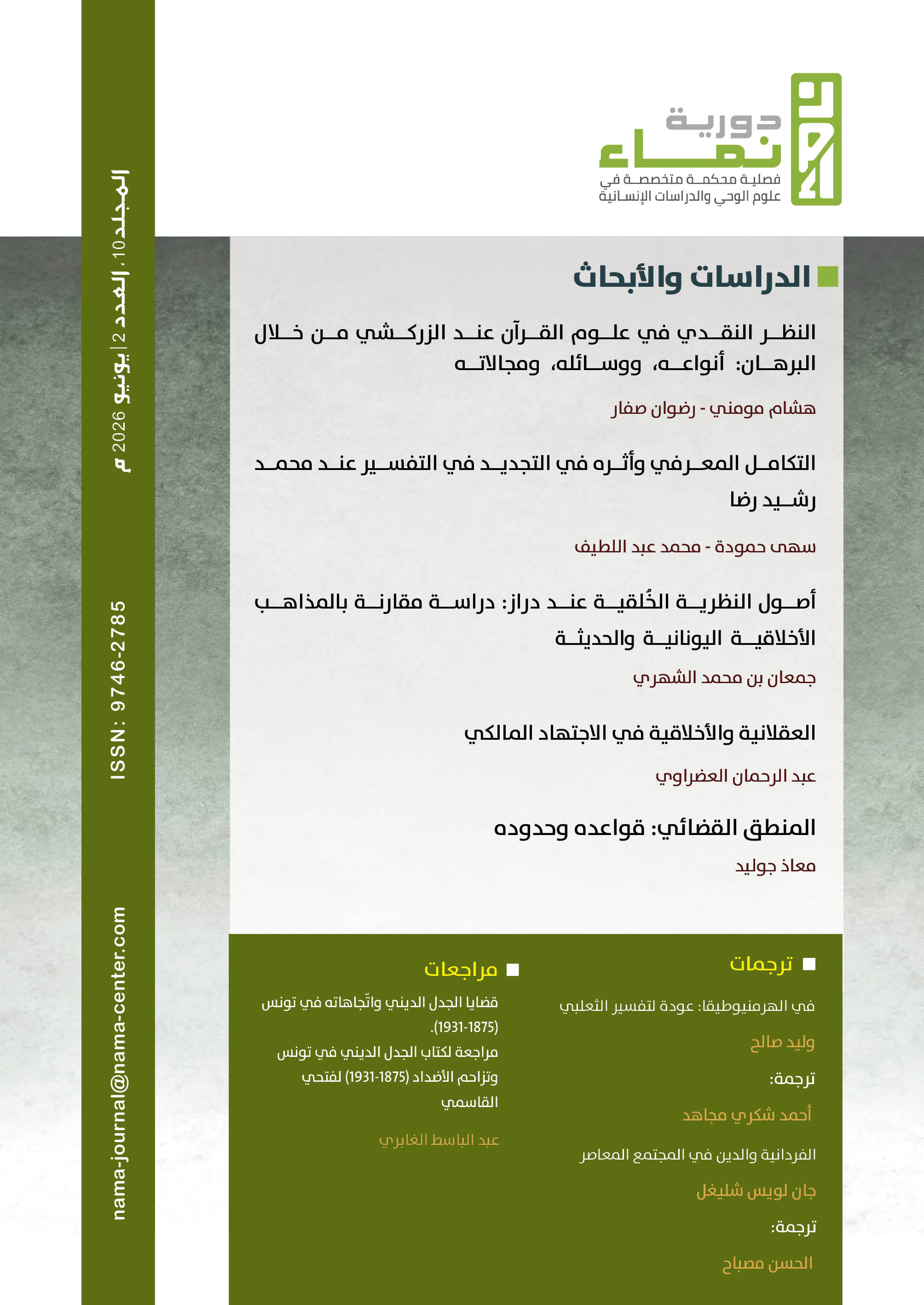
In Hermeneutics: A Return to Al-Tha‘labī’s Exegesis

Article Sidebar
-
الهرمنيوطيقا, تفسير الثعلبي, التفسير الموسوعي, التأويل السني, الفيلولوجيا القرآنية Hermeneutics, Al-Tha'labi's Exegesis, Encyclopedic, Exegesis, Sunni Interpretation, Quranic Philology
Abstract
This study explores Al-Thaʿlabī’s exegetical project through Al-Kashf wa al-Bayān, framing it as a decisive turning point in medieval Sunni Tafsīr. It highlights how Al-Thaʿlabī reshaped exegesis into an encyclopedic model that wove together philology, Hadith, allegorical interpretation, narrative traditions, and doctrinal polemics, thereby reinforcing the Qur’an’s centrality in Islamic intellectual life. The research emphasizes his ability to balance philological precision with doctrinal concerns, while also integrating homiletic and spiritual elements—including Shiʿi reports and Sufi insights—within a Sunni framework that maintained theological equilibrium. Far from being a mere transmitter of tradition, Al-Thaʿlabī emerges as an innovator who developed a flexible hermeneutical methodology capable of accommodating the cultural and intellectual transformations of his era. The study concludes that Al-Kashf wa al-Bayān laid the groundwork for “classical encyclopedic exegesis,” profoundly shaping subsequent works despite later marginalization due to sectarian polemics and critiques from figures like Ibn Taymiyyah. Ultimately, it underscores the need to rehabilitate medieval exegetical legacies as vital gateways to understanding the intellectual history of Islam.
Full text article
Authors
Copyright (c) 2026 أحمد شكري مجاهد

This work is licensed under a Creative Commons Attribution-NonCommercial 4.0 International License.
yright and License
Researchers always have copyright. The research published in the Journal is licensed under the Creative Commons Attribution-Noncommercial 4.0 International License. This means that every person can download, read and use the research, provided that he/she relates it to its author appropriately, stating any amendments made. This work cannot be used for commercial purposes.