
Is Ibn Rushd the Grandson Classified in the Ash'ari Theology?

Article Sidebar
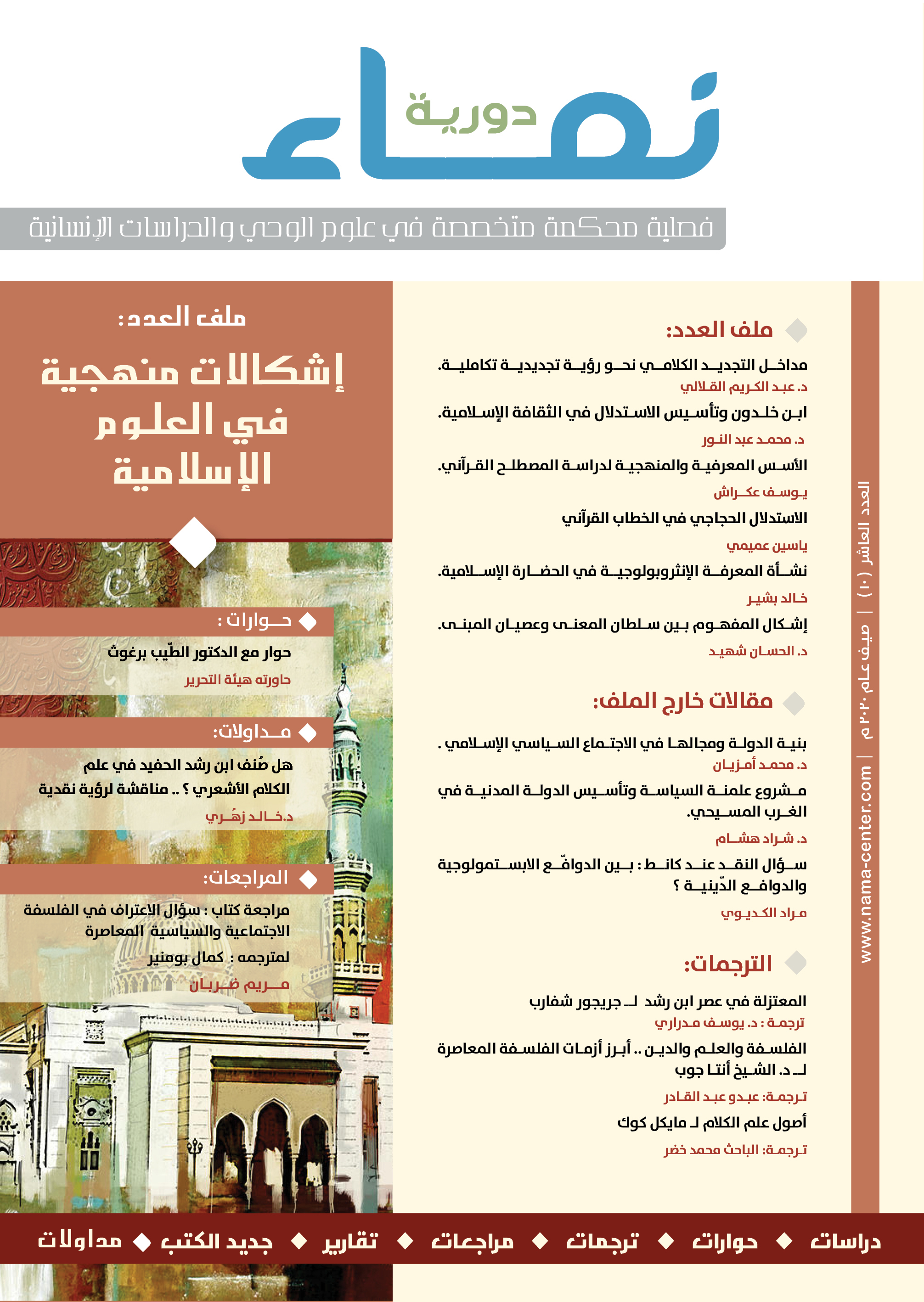
-
الأشاعرة, علم الكلام, الأندلس, المصادر الكلاسيكية Ash'ari, Theology, Andalusia, Classical Sources
Abstract
This research seeks to discuss "Ibn Rushd as an Ash'ari", through three sections. The first section refers to the logical fallacies it contains, and the second and third sections attempt to answer the following two questions: “Was Ibn Rushd classified as an Ash’ari theologist?” and “Was Ibn Rushd an Ash’ari?” In conclusion, the most important thing that can be deduced from the research lies in the following points: As long as the rational texts are philosophical texts, they are open to interpretive possibilities, and this requires that the given text is one and can be read in different and multiple readings. The Rushdian text will remain alive, to the extent that it provokes us to ask questions related to it and its owner, and to the extent that the answer leads to other questions. But if we ventured to put final answers, and these answers turned into rulings, then this way would threaten the Rushdian texts with death. The reading capabilities do not stop at the Rushidian texts, but rather go beyond them to open up also to the “documents” related to the Rushidian text, as Ibn Rushd’s commentaries on some of the doctrinal texts, such as “Murshida Ibn Tumart” and “The Humranian Creed”, even if we went to the fact that they are commentaries that fall under Andalusian Theological Sources. However, this answer is not certain, as long as these explanations are missing.
Full text article
Authors

This work is licensed under a Creative Commons Attribution-NonCommercial 4.0 International License.
yright and License
Researchers always have copyright. The research published in the Journal is licensed under the Creative Commons Attribution-Noncommercial 4.0 International License. This means that every person can download, read and use the research, provided that he/she relates it to its author appropriately, stating any amendments made. This work cannot be used for commercial purposes.