
Between the Right to Recognition and the Right to Disagreement: Review of the book: “The Question of Recognition in Contemporary Social and Political Philosophy” Translated by “Kamal Bu Munir”

Article Sidebar
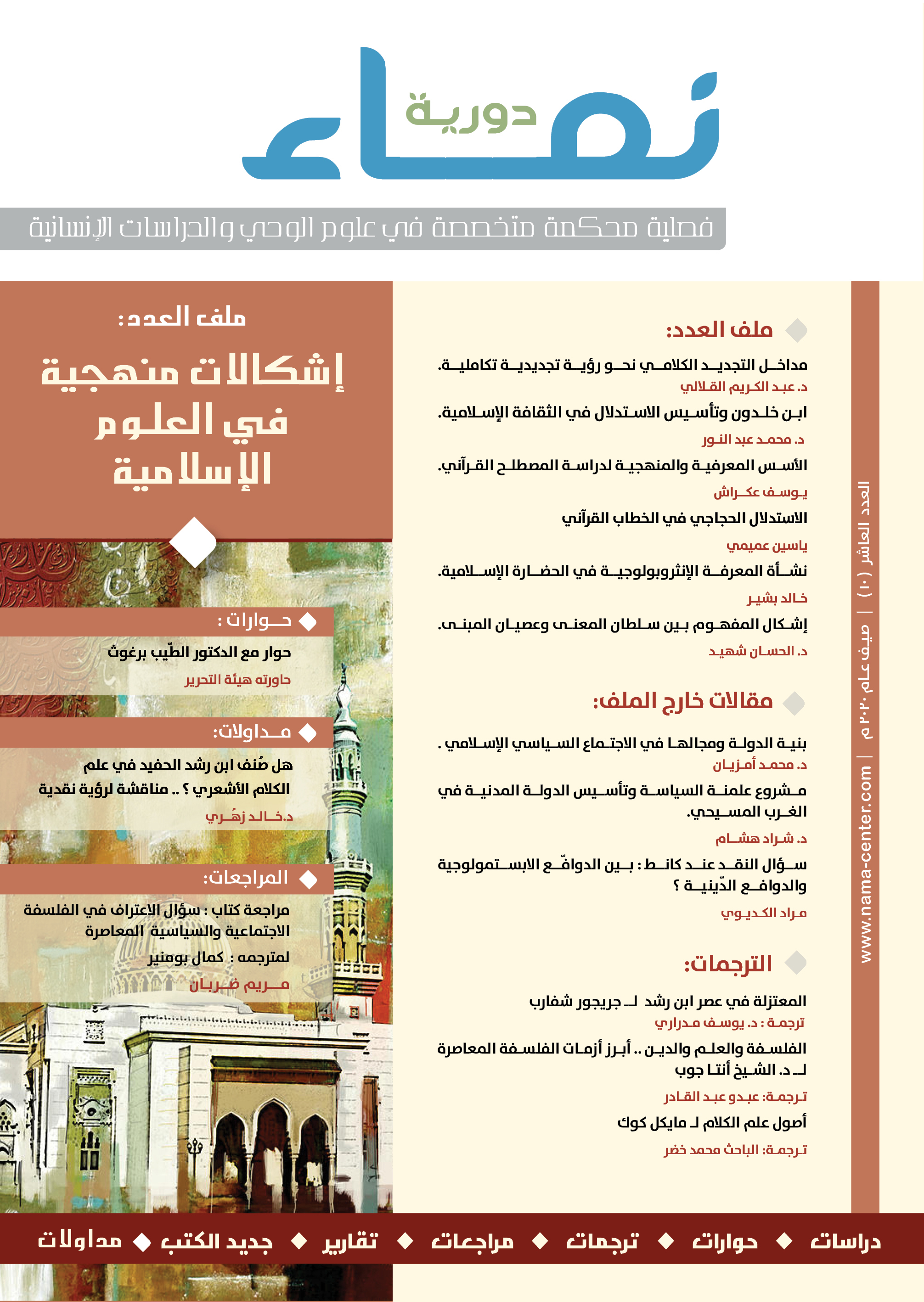
-
كمال بومنير, الاعتراف, أكسل هونيث, الفلسفة السياسية, الفلسفة المعاصرة Kamal Bu Munir, Recognition, Axel Honneth, Political Philosophy, Contemporary Philosophy
Abstract
This article presents a review of the book: "The Question of Recognition in Contemporary Social and Political Philosophy" translated by "Kamal Bu Munir", based on the fact that book reviews establish a culture of catching up behind the text in light of the rush of headlines. Acceleration, which the Frankfurt Institute seeks to address through analysis, theorizing, and criticism in the form of accelerationist rationalism, represented by the thinker Hartmut Rosa, preceded by the confession thesis of Axel Honneth, expressing a critical and philosophical way out of the third communication project of J. Habermas and its linguistic dilemma in public spaces. The recognition project is the subject of the book Kamal Bu Munir titled, "The Question of Recognition in Contemporary Social and Political Philosophy (Selected Texts)", which dealt with the conceptualization of recognition among the leaders of the school, and the interest it measures outside Frankfurt in issues of recognition by philosophers and thinkers. It was evident that they used their intellectual backgrounds and their contextualization within the analysis style and its approaches. Honneth, after his book "The Struggle for Recognition", drew a philosophical turning point after Habermas and his connections in the fields of social, political and moral philosophy, in the form of a diagnosis and treatment of forms of social contempt and political pathology in fragmented technological societies.
Full text article
Authors

This work is licensed under a Creative Commons Attribution-NonCommercial 4.0 International License.
yright and License
Researchers always have copyright. The research published in the Journal is licensed under the Creative Commons Attribution-Noncommercial 4.0 International License. This means that every person can download, read and use the research, provided that he/she relates it to its author appropriately, stating any amendments made. This work cannot be used for commercial purposes.